I Ching ancient divi
What Is the I Ching, Exactly?
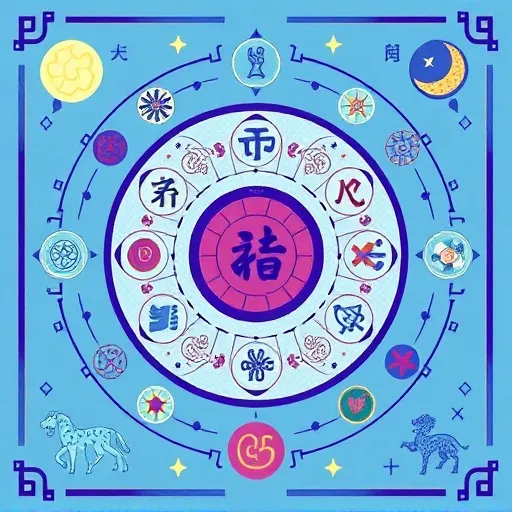
So you've heard about the I Ching and you're curious — but also maybe a little confused about what it actually is. Totally normal. Let's break it down. The I Ching (also called the Book of Changes) is an ancient Chinese divination text and philosophical system that's been kicking around for thousands of years. At its core, it's a book of wisdom built around 64 hexagrams — and each hexagram is a six-line figure made up of solid (yang) and broken (yin) lines. Every hexagram represents a particular life situation, energy pattern, or archetype, and comes with guidance on how to navigate it. If you're diving into an i ching reading for beginners guide, this is the very first thing to wrap your head around.
Here's the mindset shift that matters most: think of the I Ching less as fortune-telling and more as a mirror for your own intuition. When you consult it, you're basically asking the universe, "What's really going on here, and what should I consider?" The answer arrives as a hexagram plus its accompanying text, which you then interpret in the context of your question. Many modern practitioners — including experienced coaches and wellness professionals — describe the I Ching as a structured way to access inner wisdom. It doesn't tell you what to do; it offers perspective. That distinction is crucial for anyone following an i ching reading for beginners guide from day one.
Why This Ancient Divination Text and Philosophical System Is Having a Moment in 2026
You might wonder why an ancient text is relevant in an age of AI assistants and instant information. Actually, that's exactly why it's resonating with so many people right now. As life gets faster and more automated, there's a growing appetite for mindfulness practices that slow us down and reconnect us with our own judgment. In 2026, we're seeing a real surge of interest in self-reflection tools, and the I Ching fits right into that space. It's screen-free (mostly), reflective, and deeply personal. Online communities and learning platforms have made it more accessible than ever — you no longer need a rare printed copy or a local teacher. Curious beginners can now learn the fundamentals through guided courses, digital hexagram libraries, and interactive tools from home. That's a big reason a solid i ching reading for beginners guide is easier to find now than at any point in history.
Another factor: people are craving decision-making frameworks that aren't just cold logic. The I Ching offers a holistic perspective that considers timing, relationships, and inner alignment — things a spreadsheet just can't capture. A good i ching reading for beginners guide will keep reminding you of this balance as you practice.
Getting Started with Yin, Yang, and Trigram Basics: What You Actually Need
Here's the good news — you don't need much to begin an I Ching reading practice. Let's go over the essentials, because every i ching reading for beginners guide should cover these four tools.
1. A way to cast a hexagram. Traditionally, practitioners use three coins or 50 yarrow stalks to generate the lines of a hexagram. For beginners in 2026, three coins are by far the easiest entry point — any three coins will do. Some people prefer digital casting tools or apps, and while purists may raise an eyebrow, digital methods work just fine when you're learning. The coin method works like this: you toss three coins six times, and each toss produces one line of your hexagram, starting from the bottom and building upward. Heads and tails get assigned values, and those values determine whether a line is yin (broken) or yang (solid) — and whether it's changing or stable. Don't worry if that sounds technical; most i ching reading for beginners guide resources include a simple chart, and you'll pick it up fast.
2. A reliable reference. You'll need a translation of the I Ching text — or a trustworthy online hexagram reference. Each translation has its own flavor. For beginners, look for clear, modern-language commentary rather than dense archaic prose. A good reference explains each hexagram's meaning, its component trigrams, and offers practical guidance.
3. A journal. This is the secret weapon most beginners overlook. Write down your question, the hexagram you received, and your interpretation. Over time, this record becomes incredibly valuable — you'll notice patterns and see how the guidance played out. Many seasoned practitioners say their I Ching journal is one of their most treasured possessions.
4. A quiet mind. The most important tool isn't physical at all. Approach your reading with a calm, open mind. The I Ching isn't a vending machine for answers — it's a conversation. Take a few deep breaths before you cast, and be honest about what you're really asking.
How to Do Your First I Ching Reading: A Beginner Guide to the Six Steps
Ready to try it? Here's a simple, beginner-friendly process you can follow — think of it as your hands-on i ching reading for beginners guide in action. First, formulate your question: a good question is specific and open-ended. Instead of "Will I get the job?" try "What should I understand about my career situation right now?" The I Ching responds best to reflective questions, not yes/no demands. Next, center yourself with a few breaths and set an intention to receive guidance with humility. Then cast your hexagram using three coins, tossing six times and recording each line from the bottom up — noting which lines are changing lines (also called "moving" lines). After that, identify your hexagram by matching your six lines to one of the 64 hexagrams using your reference guide or an online tool. Then read and interpret: start with the primary hexagram's overview, look at any changing lines, and finally the "transformed" hexagram if you have changing lines. Don't rush — sit with the text. Finally, reflect and journal your impressions, hunches, and emotions. The hexagram's meaning often unfolds over days, not minutes.
Pro tip from seasoned practitioners: don't cast about the same question repeatedly just because you didn't like the answer. The I Ching is meant to be consulted with sincerity, not used as a slot machine. Any honest i ching reading for beginners guide will tell you the same thing.
Understanding the Eight Trigrams and the Yin Yang Balance
To really get comfortable with I Ching reading, it helps to understand the building blocks. Every hexagram is made of two trigrams stacked on top of each other. A trigram is a three-line figure, and there are eight trigrams in total, each representing natural forces like Heaven, Earth, Water, Fire, Wind, Thunder, Mountain, and Lake. Yin (the broken line) represents receptivity, softness, and shadow. Yang (the solid line) represents activity, strength, and light. The interplay between these two forces — how they balance, shift, and transform — is the heart of the I Ching's wisdom. When you start seeing hexagrams as combinations of these elemental forces, interpretation becomes much more intuitive. For example, a hexagram with Water below and Fire above tells a very different story than Mountain below and Wind above. Learning the eight trigrams is the single best investment a beginner can make — it's like learning the alphabet before reading sentences. A thorough i ching reading for beginners guide will always spend real time here.
A quick note on changing lines: when you cast a hexagram, some lines come out as "changing" — meaning they're in transition from yin to yang or vice versa. These lines carry specific messages and add nuance to your reading. Many beginners find changing lines confusing, so here's a simple approach: if you get one or two, pay close attention to their texts. If you get many, focus on the overall message of the primary hexagram and treat the changing lines as added color. Don't stress about mastering it immediately — no i ching reading for beginners guide expects you to nail this on day one.
Key Hexagrams, Common Beginner Mistakes, and a Simple Weekly Practice
There are 64 hexagrams, and you'll encounter them organically. But a few are especially common for beginners: Hexagram 1 — The Creative (pure yang energy, initiative, new beginnings), Hexagram 2 — The Receptive (pure yin energy, patience, letting things unfold), Hexagram 3 — Difficulty at the Beginning (the chaos of starting something new), Hexagram 11 — Peace (harmony between Heaven and Earth), Hexagram 12 — Standstill (sometimes the right move is to wait), Hexagram 29 — The Abyss (Water over Water, navigating difficulty with integrity), and Hexagram 64 — Before Completion (care and attention matter even near the finish line). You don't need to memorize these — just knowing their general themes helps you feel oriented.
As for pitfalls, every beginner stumbles a bit. The most common ones: treating the I Ching like a Magic 8-Ball (it's about perspective, not certain prediction), asking vague or multiple questions at once, skipping the journal, ignoring the trigram structure (the trigrams often reveal why a hexagram says what it does), and casting too often. Consistency matters more than intensity — many beginners find a simple weekly ritual, like every Sunday morning, helps them build fluency. In 2026, plenty of digital learning platforms and study communities make it easy to stay consistent with structured courses, discussion groups, and guided reflection prompts. The key is a gentle habit, not a chore. Over time, you'll start recognizing hexagram themes in everyday life — a difficult project might remind you of Hexagram 3, a moment of harmony might bring Hexagram 11 to mind. That's when the I Ching stops being a book you consult and becomes a lens you see through. And that, more than anything, is what a great i ching reading for beginners guide is ultimately pointing you toward.
One last thing worth knowing: people come to the I Ching from all kinds of backgrounds — spiritual, secular, philosophical, and everything in between. It's not a religion, and it doesn't require any particular belief system. Some practitioners approach it as a divination tool, others as a psychological mirror, and still others as a philosophical text for contemplation. All you need is curiosity and a willingness to engage sincerely — and honestly, that's the best foundation any i ching reading for beginners guide could ask for.